How the US and UK Markets as an Actor Differ: A Quick Overview
By Liz And Dickie | Jan 22, 2026The acting markets in the US and UK are both vibrant yet distinct in many ways. The primary difference lies in their approaches to casting, training, and career opportunities, which shapes the experiences of actors in both markets. For instance, while American actors often focus on broad national exposure, UK performers might prioritize theatrical credibility and diverse roles.

As I explore these differences, I find the ways in which each market addresses acting challenges particularly interesting. From unique coaching techniques to varied pathways for actors, these factors influence not just where performers work, but how they develop their craft. Each system reflects the cultural nuances of its respective nation, making it essential to understand these variances if you’re looking to navigate either industry.
Career paths and recognition can vary significantly as well. Actors in the US might find quicker access to fame through blockbuster films, while those in the UK often build strong stage careers first. This discussion underscores why awareness of both markets is crucial for aspiring actors and industry enthusiasts alike.
Key Takeaways
- US and UK acting markets differ in casting and career development.
- Training approaches vary, impacting actors' career trajectories.
- Recognition and opportunities are influenced by market preferences.
Key Differences Between Acting in the US and UK

Acting in the US and UK markets shows some distinct characteristics that can really shape how performances are approached. I’ve noticed that differences in performance style, training backgrounds, industry structure, and cultural influences play significant roles in how actors find success in these markets.
Performance Style
In the US, the performance style tends to be more emotionally driven and focused on individual character arcs. Actors often emphasize a broader range of expressions, making it common to see performances that lean towards the dramatic. In film, this translates to a polished delivery that aligns with commercial expectations.
Conversely, acting in the UK often embraces subtlety. The performances can feature dry wit and nuanced character portrayals, honed from a strong theater tradition. The emphasis is on the text and subtext, allowing the written word to come to life through more understated emotion.
Training Backgrounds
Training also varies widely between the two countries. In the US, many actors undergo formal education in drama schools, pursuing degrees and programs specifically tailored for film and television. Schools like Juilliard or NYU are examples where actors immerse themselves in various techniques, including method acting.
In the UK, the landscape is slightly different. Many actors attend drama schools as well, like RADA or Lambda, focusing heavily on classical training with Shakespearean influences. Apprenticeships and hands-on experiences in theater are also common pathways, giving actors practical exposure before they step into the spotlight.
Industry Structure
The industry structures in the US and UK can impact how actors work and what opportunities they have. The US market is larger and tends to prioritize commercial success. Hollywood's infrastructure means that actors often seek visibility through high-budget films and series, which can lead to bigger fame but also intense competition.
In contrast, the UK market is smaller and encourages a more diverse range of productions. This allows actors to explore roles in television, theater, and film without as much pressure for commercial success. The balance provides actors more opportunities to take on challenging or unconventional roles.
Cultural Influences
Cultural narratives shape acting in both countries significantly. In the US, there’s a tendency to celebrate the “American Dream,” influencing character motivations and story arcs. Productions often focus on individualism and personal growth, reflective of broader societal values.
The UK, on the other hand, frequently explores themes rooted in history and class dynamics. There’s a rich tradition of tackling social issues in a more understated way. This cultural backdrop leads to a distinct type of humor and dramatic tension, influencing how actors approach their craft.
Casting Processes in the US Versus UK
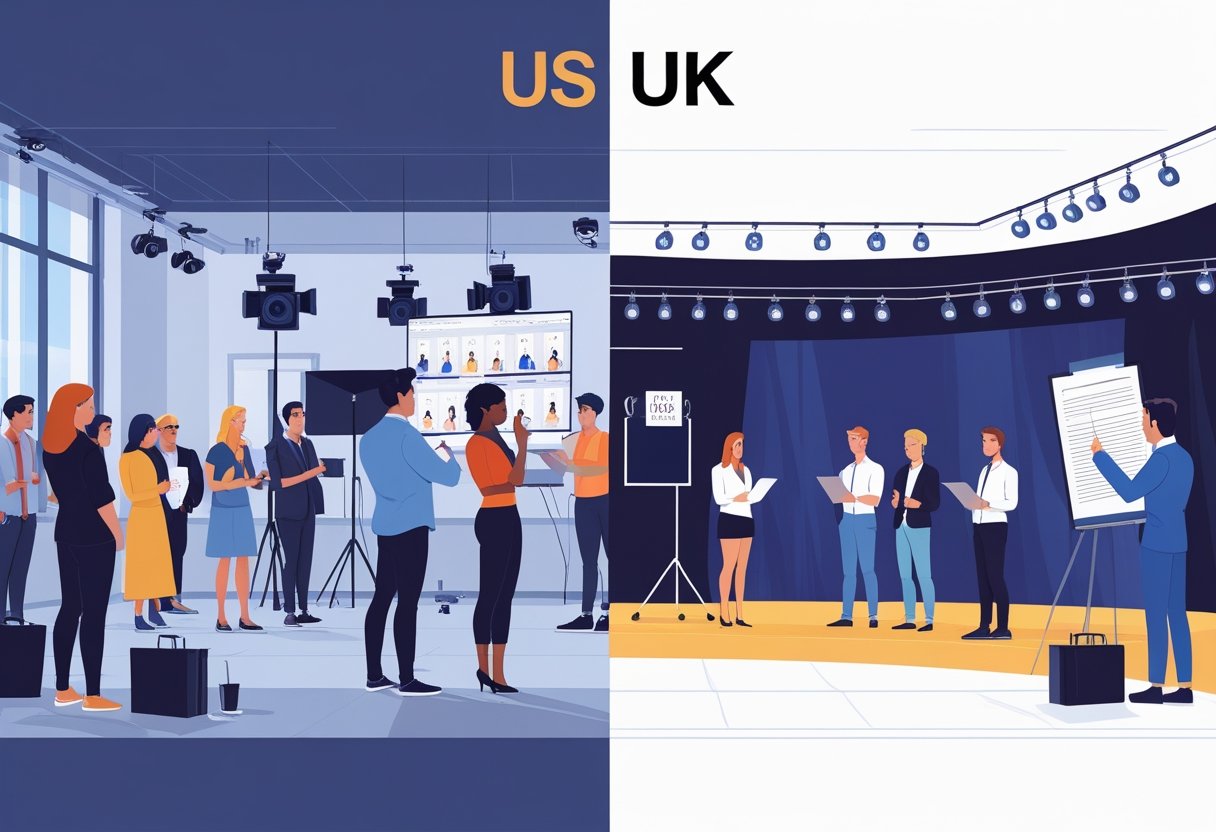
Casting processes in the US and UK have distinct characteristics that can significantly influence an actor's experience. These differences range from audition expectations to the role of agents and the callback system.
Audition Expectations
In the US, auditions often focus heavily on preparation. Actors are expected to come in with a polished performance. Frequently, they might be asked to perform multiple takes of the same scene, showcasing their range. Self-tapes are also common, allowing actors to submit their auditions digitally.
In contrast, the UK tends to emphasize a more relaxed atmosphere. Auditioning actors might be given more context about their character and scene, which can lead to a more nuanced performance. The expectation isn’t usually as high for multiple takes. Nevertheless, preparation is still essential; knowing the script and character basics is a must.
Agent Roles
Agents in the US are often more involved in the day-to-day management of an actor's career. They typically have extensive networks in the industry, pushing for their clients to snag auditions and roles.
In the UK, agents play a crucial role as well, but their focus can be a bit different. They often work closely with casting directors, helping facilitate auditions but may not be as hands-on in the overall management. The relationship between actors and agents can feel more collaborative in the UK, but the expectations remain high on both sides for successful networking.
Callbacks and Offers
In the US, callbacks are an integral part of the casting process. Actors may go through multiple rounds before landing a role, often facing stiff competition. It’s not unusual for filmmakers to bring in actors several times before making a final decision.
When an offer is made, it tends to be through formal contracts. There's usually a lot of negotiation involved, especially regarding pay and terms.
In the UK, callbacks occur too, though there can be more emphasis on the tone of the meetings rather than just the audition performance. Offers can come in various forms, and negotiations might be less formal. The focus is commonly on building relationships and trust, which can lead to a different experience throughout the process.
Training and Education for Actors

When I think about the training and education for actors, two key factors stand out: formal education through drama schools and hands-on experience that comes from working in the industry. Networking also plays a crucial role in shaping an actor's career. Let’s break down each element.
Drama Schools
Drama schools in both the US and UK offer rigorous programs that refine an actor's craft. In the UK, institutions like RADA and the Royal Conservatoire of Scotland have a rich history and provide structured training in acting techniques, voice, and movement. Courses typically last three years and culminate in a degree.
In the US, schools such as Juilliard and the Tisch School of the Arts follow a similar model but often emphasize a diverse range of performance styles, from stage acting to screen techniques. The training is intensely practical, with students participating in numerous productions that simulate real-world performance conditions. This experience helps in building confidence, foundational skills, and readiness for auditions after graduation.
On-the-Job Learning
The journey doesn’t stop at drama school; practical experience is invaluable. Many actors begin their careers with small roles in theater, television, or film. This on-the-job learning is crucial. It allows me to hone my skills while adapting to the demands of various productions.
Participating in community theaters or student films can be a great way to gain experience. Each role offers lessons, from understanding script analysis to developing character backstories. What I find most beneficial is the ability to receive real-time feedback from directors and peers, which is something formal education can't fully replicate.
Networking Opportunities
Networking is essential in the acting profession. In both the US and UK, industry events, workshops, and festivals provide platforms for actors to connect with casting directors, agents, and other professionals. Building relationships can often lead to auditions and collaborations.
Many drama schools also facilitate networking opportunities through showcases where students perform in front of industry insiders. Additionally, social media has transformed how actors connect. Platforms like LinkedIn and Instagram offer spaces to promote work and reach out for new opportunities. These connections can make a significant difference, especially when starting a career in acting.
Stage Versus Screen: Market Preferences

When I think about the differences in market preferences between the US and UK, the distinction between stage and screen is particularly striking. Each country has its unique cultural inclinations and opportunities that shape the landscape of performance arts.
Theatre Culture
In the UK, theatre holds a significant place in the cultural fabric. The West End in London is a world-renowned destination for theatrical performances. Audiences flock to experience classic productions and innovative plays. The UK's dramatic heritage, from Shakespeare to contemporary works, fosters a robust appreciation for live performance.
In contrast, though the US has a vibrant theater scene, especially in cities like New York and Chicago, it often feels less entrenched in the national identity. Broadway is famous, but there’s a stronger inclination towards blockbuster films and television, which can overshadow local productions.
Television and Film Focus
The US entertainment market heavily emphasizes film and television. Blockbusters with substantial budgets dominate the landscape, shaping tastes and expectations. The streaming revolution has changed viewing habits, with platforms like Netflix and Hulu offering an array of content that pulls audiences in.
Meanwhile, the UK does have a thriving TV and film scene, but it often emphasizes quality over quantity. British series tend to favor character-driven storylines and limited seasons, making them unique. Though I enjoy both markets, the UK's approach feels more intimate compared to the larger-than-life American productions.
Opportunities for Newcomers
For newcomers, the UK theatre scene can be more accessible. I see numerous programs and initiatives aimed at nurturing new talent. There's a community feeling, where fresh voices are encouraged to experiment and contribute.
On the other hand, breaking into the US market, especially in film and television, can be a daunting task. It often requires significant networking and resources, making it tough for ambitious talent to get noticed. While there are pathways, the competition is fierce, with many vying for the same roles.
Career Paths and Opportunities

Navigating career paths in the US and UK markets reveals distinct opportunities influenced by local business cultures and industry demands. I’ll touch on the early-career support available, typical progressions I’ve observed, and how transitioning between these markets can play out.
Early-Career Support
In the US, companies often emphasize mentorship programs and internships. These initiatives provide hands-on experience and valuable networking opportunities. Many firms offer structured training programs tailored for new graduates, which can be pivotal for career advancement.
In the UK, graduate schemes play a significant role. They usually span one to two years and encompass rotations through various departments. This approach helps me to gain a broader skill set while understanding the organization’s inner workings. Furthermore, professional development courses are often subsidized, enhancing my credentials right from the get-go.
Typical Progressions
Career trajectories in the US tend to be relatively non-linear. Moving between roles and companies can be common as individuals seek to diversify their experiences. I've noticed a trend where professionals often change jobs every few years to grab new responsibilities or increase their salaries.
In contrast, the UK market typically values steadiness and longevity. It’s common to find individuals staying in one company for extended periods, moving up the ranks gradually. Promotions are often based on tenure and performance, and I see that there’s a strong culture of loyalty to employers, which frequently results in senior roles being filled internally.
Transitioning Between Markets
Transitioning from the US to the UK market or vice versa can be challenging but rewarding. I’ve found that American professionals may need to adjust to a more formal communication style in the UK, where politeness and indirectness are often prioritized.
Conversely, for UK professionals, the US market may demand a more aggressive approach in networking and self-promotion. Understanding these cultural nuances is crucial for success. Additionally, academic qualifications and professional certifications can carry different weights across these markets, impacting job prospects and advancement opportunities.
Industry Challenges and Competition
Navigating the U.S. and U.K. markets presents unique challenges. I've noticed that competition levels vary significantly, influenced by consumer preferences and regulatory landscapes.
In the U.S., the sheer size of the market can create intense competition among established players. This can lead to price wars and aggressive marketing campaigns. Here are a few key points I observe:
- Market Saturation: Many industries, like tech and retail, are highly saturated. New entrants often struggle to carve out a niche.
- Regulatory Differences: The U.K. has stricter regulations on marketing and data protection. This can hinder quick responses to market trends.
On the flip side, the U.K. market often values brand loyalty and heritage. There's a sense of trust in established brands, which can be a hurdle for newcomers. Competition here tends to focus more on quality and customer service rather than just price.
Challenges I've observed:
- Adapting to Local Preferences: Tailoring products to fit local tastes can be a game changer.
- Distribution Networks: Establishing reliable supply chains can take time and investment.
- Technology Adoption: The U.S. market tends to adopt new technologies faster, creating pressure on U.K. competitors to keep pace.
In both markets, staying ahead requires constant innovation and a deep understanding of consumer behavior.
Union Representation and Legal Differences

Union representation is a crucial aspect that highlights the differences in the labor market dynamics between the US and UK. Each country has distinct union structures and legal frameworks that influence how actors are represented and negotiated for their rights.
SAG-AFTRA vs. Equity
In the US, SAG-AFTRA (Screen Actors Guild-American Federation of Television and Radio Artists) plays a pivotal role in representing actors. It covers film, television, radio, and digital media. The union provides members with a collective bargaining power that helps secure better pay and working conditions.
In contrast, Equity in the UK provides similar protective measures for its members, focusing on theater, film, television, and radio. Equity emphasizes fair contracts and working conditions, advocating for a diverse and inclusive industry.
Both unions have specific provisions regarding pay scales, working hours, and residuals, but they operate under different legal environments. SAG-AFTRA primarily functions within a more litigious system, while Equity engages more in dialogue with production companies and government entities.
Contract Standards
When it comes to contract standards, differences are clear between the US and UK. In the US, SAG-AFTRA mandates standard minimum pay scales and conditions for its members, ensuring that all negotiated contracts meet certain criteria. These standards help maintain a baseline for salaries, working hours, and safety provisions.
In the UK, Equity sets guidelines that are similarly comprehensive, yet they often allow for more flexibility based on individual productions. This can lead to variations in pay and conditions, particularly in independent projects where negotiation plays a significant role.
Both unions also provide resources and support for addressing breaches of contract, but SAG-AFTRA tends to have a more formal grievance process due to the legal landscape in the US. In contrast, Equity often encourages direct conversation to resolve issues.
Pay, Recognition, and Star Power

In exploring pay, recognition, and star power, it's clear that actors in the US and UK markets face different landscapes. Their earnings, celebrity status, and the accolades they receive vary due to cultural perceptions and industry structures.
Earnings Potential
When it comes to earnings potential, there’s a noticeable gap between the US and UK. In the US, top actors can rake in salaries that reach into the tens of millions per film. For example, A-list stars can earn from $15 million to $20 million per project, plus backend profits. In contrast, UK actors may see significant pay as well, but it often falls short of these American figures.
In the UK, a lead role in a series or film can bring in between £1 million to £5 million, depending on the project. While the scale is smaller, that doesn’t mean these actors should be underestimated. The UK does offer a more diverse range of roles and often smaller, well-crafted productions that can be artistically rewarding.
Celebrity Status
Celebrity status plays out differently across these markets. In the US, actors enjoy a level of fame that often translates into global recognition. They frequently dominate entertainment news, leading to brand partnerships and endorsements that boost their profile.
Meanwhile, British actors often maintain a more understated public persona. While they can achieve international fame, there’s less focus on the celebrity culture of red carpets and tabloid coverage. Still, actors such as Daniel Craig and Benedict Cumberbatch show that UK talent can rise to A-list status, bringing with it a unique blend of respect and celebrity.
Awards and Honors
Awards vary significantly between the two nations. The US boasts major award shows like the Oscars and Emmys, which can define careers. Winning or even being nominated for these awards can propel an actor’s status and earning potential.
In the UK, the BAFTAs hold similar prestige, but the overall volume and global impact are often less than that of the Oscars. Many esteemed British actors may prioritize stage awards, such as the Olivier, which are highly regarded within the theater community. Both markets recognize talent, but their paths and recognition systems can be quite distinct.
Final Thoughts on Navigating Both Markets

Navigating the US and UK markets can feel like a balancing act, but I’ve found it’s all about understanding the unique characteristics of each. The US market is generally larger and often more volatile, while the UK market has its own quirks influenced by its regulatory environment and economic factors.
Things I keep in mind:
-
Regulatory Differences: US regulations can be strict, especially regarding transparency. The UK tends to have a more flexible approach.
-
Market Hours: Trading hours differ. When the US market opens, the UK one is closing. I plan my strategies accordingly.
-
Cultural Nuances: Consumer behaviors vary. For example, brand loyalty might be stronger in the UK than in the US. Understanding these subtleties helps me tailor my approach.
Staying on top of economic news in both regions is crucial. I follow platforms that provide insights on economic indicators like GDP and inflation rates.
Lastly, keeping an eye on currency fluctuations is essential. A small change can impact my returns significantly, especially in cross-border investments.
With a solid game plan and mindful adjustments, I’ve navigated both markets more smoothly. Keeping things flexible allows me to take advantage of opportunities as they arise.
Frequently Asked Questions

I often get questions about the differences between the acting scenes in the US and the UK. Here are some common inquiries that shed light on the unique aspects of each market.
What makes the acting scene in the US different from the UK's?
The US acting scene tends to emphasize mainstream blockbuster productions, while the UK often leans towards character-driven narratives and theatrical roots. In the US, the scale of productions is generally larger, with more emphasis on celebrity culture. The UK focuses more on the craft of acting and storytelling.
Are there different training methods for actors in America compared to Britain?
Yes, training methods vary notably. In the US, many actors attend film schools or conservatories that emphasize on-camera work. British training often involves foundational theater experience and comprehensive acting techniques, with institutions like RADA and LAMDA focusing heavily on stage performance.
Why do so many UK actors end up in Hollywood?
Many UK actors find opportunities in Hollywood due to the industry's global nature. The crossover happens because Hollywood craves diverse talent and often seeks skilled actors from the UK for their expertise and unique perspectives. Successful British actors can raise their profiles quickly in the US market.
How do industry connections affect acting careers differently in the US and UK?
In the US, connections often play a significant role, with networking at industry events being crucial. The UK tends to foster personal relationships over time, where an actor’s reputation within theater circles can lead to opportunities in film and television.
What's the inside scoop on auditioning for roles in the US versus the UK?
Auditioning in the US can feel more competitive, often involving multiple rounds and a significant focus on callback sessions. UK auditions may feel less formal and may prioritize the actor’s unique take on a character, allowing for more creativity in the process.
How do the roles and opportunities available to actors compare between Hollywood and the British film industry?
Roles in Hollywood often offer larger paychecks and more high-profile projects. In contrast, the British film industry provides unique character roles that might not have the same financial rewards but allow for artistic exploration. Both markets have their own unique sets of opportunities and challenges.